Ask any patient what they remember most about a hospital visit and very few will mention the consultation itself. What they remember is the queue: one line to register, another to pay, another to collect a card or a number, and a fourth at the pharmacy, each one requiring them to explain who they are and why they are there, again.
None of that waiting is clinical. It is administrative friction, and almost all of it exists because identifying a patient and settling a bill have traditionally required a person behind a desk to manually look something up. NFC patient cards remove that step entirely.
How a tap actually replaces a queue
An NFC patient card carries a unique identifier linked to the patient's record in the hospital's system. Tap it at the front desk, and the patient's file opens automatically, no name search, no spelling out a date of birth. Tap it at the pharmacy or the lab, and the same identification happens instantly. Where the card is also linked to a prepaid wallet, billing happens the same way: a service is rendered, the amount is deducted, and a receipt is generated, without cash changing hands or a separate billing queue forming.
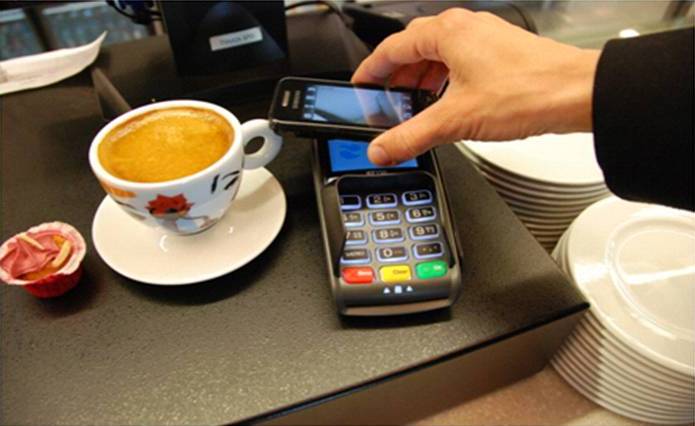
This is the same underlying idea as contactless payment at a retail till, applied to a context where the thing being verified is not just "can this person pay" but "who is this person, and what is their history with us."
Nigeria is already moving this way, just not in healthcare yet
The infrastructure and the public habit for this kind of payment already exist in Nigeria, built by the financial sector over the last decade. The Central Bank of Nigeria's cashless policy, introduced in 2012, set the direction, and the numbers since have been steep:
- Electronic payment transactions processed through NIBSS hit an all-time high of ₦387 trillion in 2022.
- Transaction volume rose from 3.4 billion in 2021 to 5.1 billion in 2022, a year-on-year increase of roughly 50%.
- Cash's share of total transactions fell from 91% in 2019 to 55% in 2023, as electronic alternatives took over.
- The CBN has since published dedicated guidelines for contactless payments, and an industry committee has earmarked funding specifically to push contactless adoption further.
In other words, Nigerians have already adapted to tapping instead of queuing, in banking halls, on public transport, and at retail counters. Healthcare has simply been slower to apply the same pattern, despite hospitals being one of the few places where the queue is at its most frustrating and the stakes of a delay are highest.
Why this matters more in a hospital than at a till
A slow queue at a coffee shop is an inconvenience. A slow queue at a hospital's billing desk can delay a patient from receiving a result, picking up medication, or simply leaving. The administrative bottleneck compounds whatever the patient is already dealing with.
It also affects the hospital's own operations. Front desk and pharmacy staff spend a meaningful share of their day on identification and cash handling rather than on the parts of their job that actually require judgement. Removing that load does not just speed up the patient experience, it frees staff time at every point of care.
The card does not make a hospital visit shorter because it is impressive technology. It is shorter because identifying a patient stops being a manual task.
What this looks like inside Elixir
Elixir's NFC wallet system links a card to a patient's record and balance the same way described above: tap to identify, tap to bill, with a full transaction history kept automatically for both the patient and the hospital's accounts team. Cards are issued individually at roughly the cost of the physical card itself, and the reader hardware needed at each point of care is included with installation, so the cost of adopting it is closer to the cost of printing ID cards than the cost of a new payment system.